3nm Flagship Smartphone Processors: GPU Ray Tracing, Vapor Chamber Cooling, and Battery Efficiency
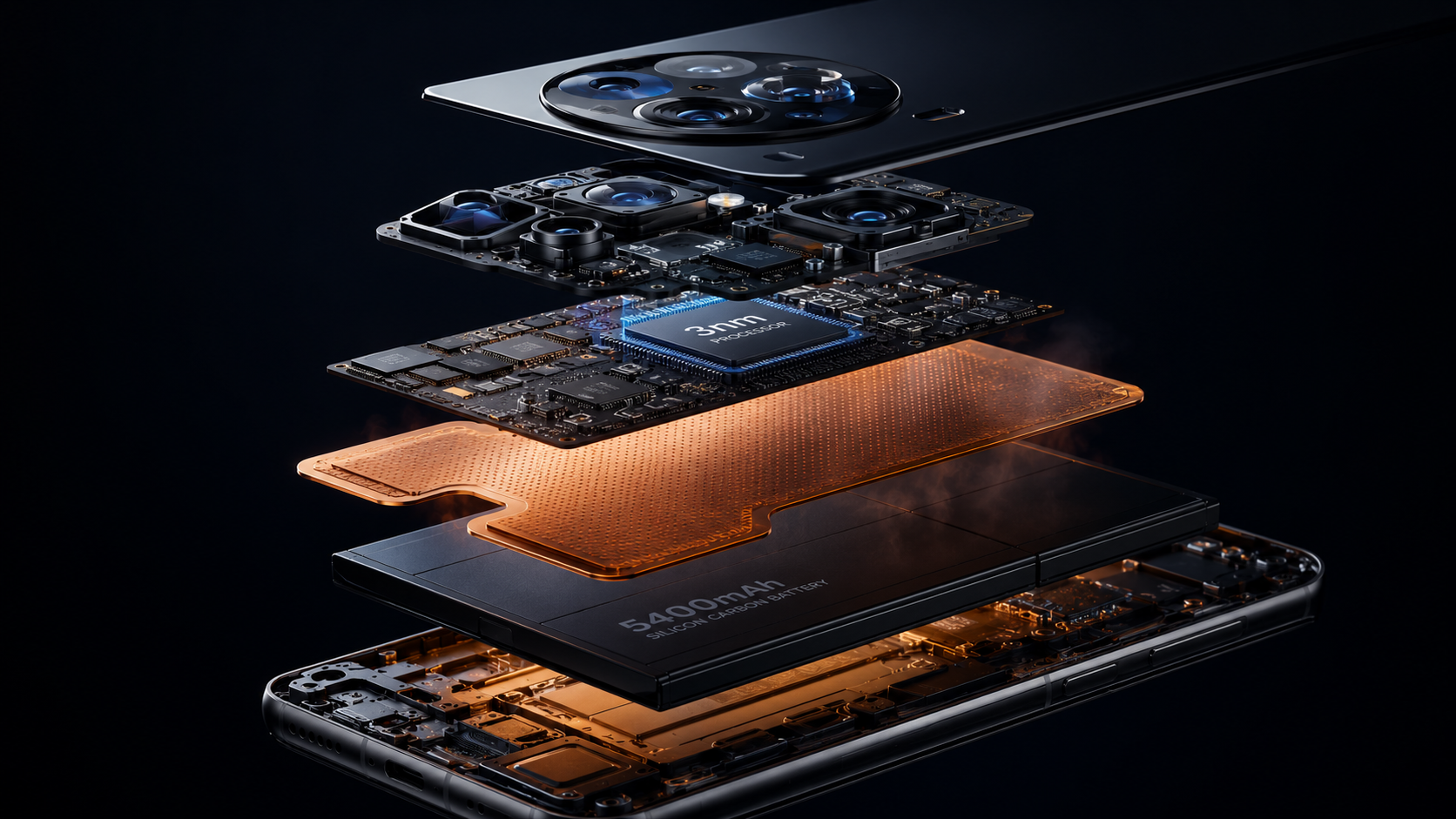
Modern flagship mobile Processors (SoCs) fabricated on advanced 3-nanometer (3nm) semiconductor nodes are pushing compute performance to desktop-class levels. However, unleashing extreme CPU clock speeds and real-time hardware ray tracing within a sealed fanless smartphone frame demands cutting-edge thermal management, low-power RAM protocols, and intelligent power distribution.
1. Silicon Microarchitecture & Hardware Ray Tracing
Next-generation mobile SoCs feature aggressive core configurations designed for heavy multitasking and console-grade mobile gaming:
-
3nm Node Fabrication: Shrinking transistor gates allows billions of additional transistors per square millimeter, reducing power consumption by up to 20%–30% at equivalent clock speeds.
-
Hardware-Accelerated Ray Tracing: Dedicated GPU ray-tracing cores simulate realistic light reflections, soft shadows, and global illumination in real time for AAA mobile gaming titles.
-
LPDDR5X RAM & UFS 4.0 Storage: Ultra-fast memory bandwidth exceeding 8.5 Gbps ensures instantaneous app loading, smooth multi-window multitasking, and high-throughput AI model inference.
2. Advanced Vapor Chamber (VC) Thermal Management
Sustained peak performance depends entirely on how fast heat is transferred away from the central silicon:
Heat Transfer Cycle inside a Flagship Vapor Chamber:
1. Liquid Evaporation: Heat from SoC boils liquid coolant inside vacuum chamber.
2. Vapor Transfer: Hot vapor travels to cooler areas near the outer chassis.
3. Condensation & Capillary Return: Vapor cools down, liquid condenses, and returns to SoC via copper wick.
High-end flagship devices deploy 3D dual-layer vapor chambers covering over 5,000mm² of surface area, reducing thermal throttling by up to 45% during intense gaming sessions or 8K video recording.
3. Enterprise Value & Carrier Ecosystem
As mobile devices become primary computing platforms for enterprise remote workers, high-end performance, fast Wi-Fi 7/5G mmWave connectivity, and extended battery endurance justify premium flagship price tags ($1,000–$1,600+), generating high-value device financing and commercial mobile plan sales for telecommunication providers.